

Imagine your patient is struggling to breathe. They’re using a standard nasal cannula, but their oxygen levels aren’t improving, and they look increasingly tired and distressed. You know they need more support, but you want to avoid the complexities and potential complications of more invasive methods if possible. This is where High Flow Nasal Cannula (HFNC) therapy becomes an invaluable tool in modern respiratory care. HFNC provides a non-invasive yet powerful approach to improving oxygen delivery and reducing the work of breathing. This guide will introduce you to HFNC, exploring why it’s a game-changer in respiratory support and how it works so effectively.
Think of HFNC as the engine block of contemporary respiratory therapy. It’s not just about delivering oxygen—it’s about delivering it in a way that supports the patient’s physiology, enhances comfort, and allows for better outcomes. Let’s break it down step by step.
What is HFNC Therapy?
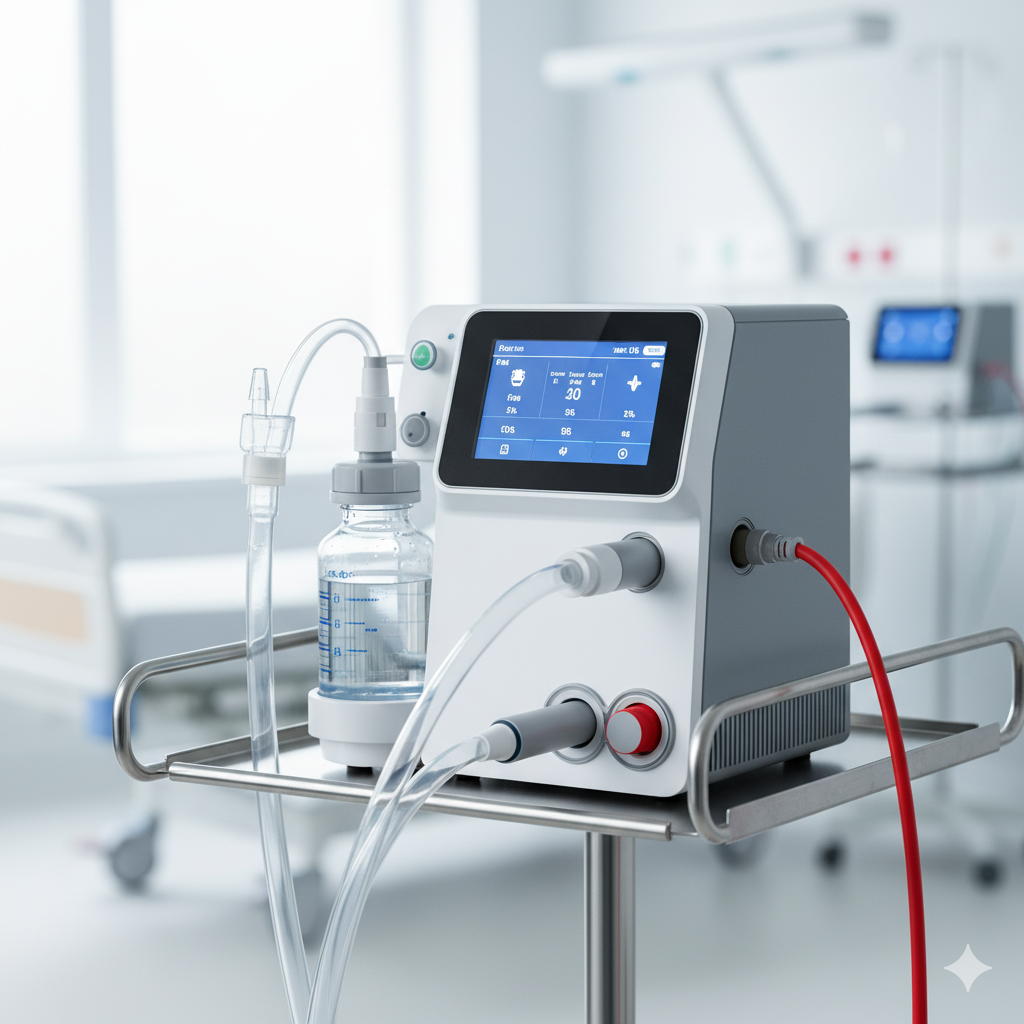
High Flow Nasal Cannula (HFNC) therapy is a sophisticated respiratory support system designed to deliver a high flow of warm, humidified, oxygen-blended air through a small nasal interface. Unlike conventional oxygen therapy, HFNC offers a significant upgrade in both comfort and efficiency, making it an ideal solution for patients requiring more robust support.
To put it into perspective, if a standard nasal cannula is like a gentle breeze, HFNC is like a perfectly calibrated, warm wind tailored to meet the body’s exact breathing needs. This difference is critical—not just in the amount of oxygen delivered, but in how that oxygen is delivered. HFNC is designed around three key features that work together to provide superior respiratory support:
- Heated Air: The air is warmed to body temperature (approximately 37°C), preventing the discomfort and irritation that can result from cold, dry oxygen. This warmth also helps preserve the natural function of the nasal passages and airways.
- Humidification: The air is nearly 100% humidified, which keeps the airways moist and improves the clearance of mucus. This makes the therapy far more tolerable for patients, especially over extended periods.
- High Flow Rate: HFNC can deliver gas flow at rates up to 60 liters per minute or even higher. This high flow ensures that the patient’s inspiratory needs are fully met, providing consistent oxygen delivery with every breath.
These features make HFNC a powerful option for patients who need more than just a standard nasal cannula but may not yet require more invasive interventions like non-invasive ventilation (NIV) or intubation.
The Key Mechanisms: How Does HFNC Actually Work?
To truly appreciate why HFNC is so effective, it’s important to understand the mechanisms behind it. A helpful way to remember its primary benefits is the mnemonic HIFLOW, which summarizes the physiological advantages HFNC provides.
H – Heated and Humidified Gas
Conventional oxygen therapy delivers cold, dry gas, which can irritate and damage the nasal mucosa, dry out the airways, and thicken secretions. This discomfort often makes it difficult for patients to tolerate therapy for long periods. HFNC overcomes this by delivering warm, humidified air, which prevents these issues. The warmth mimics the natural temperature of air in the respiratory system, while the humidity keeps the airways moist. This not only improves comfort but also helps maintain the natural clearance of mucus, reducing the risk of airway blockages or infections.
For example, imagine a patient with thick, stubborn secretions caused by prolonged dry oxygen use. HFNC’s humidified air can loosen these secretions, making them easier for the patient to clear, which improves overall lung function.
I – Inspiratory Demands Met
During respiratory distress, patients often breathe deeply and quickly, trying to draw in more oxygen than low-flow devices can provide. When the oxygen flow is insufficient, patients often end up breathing in extra room air, which can dilute the oxygen they’re receiving. HFNC solves this by delivering gas at a flow rate high enough to meet or even exceed the patient’s peak inspiratory demand. This ensures that nearly every breath the patient takes is filled with the precise, oxygen-rich mixture they need.
For a patient in acute distress, this can be the difference between stabilizing their condition and needing more invasive interventions. By matching their natural breathing pattern, HFNC supports their respiratory effort rather than working against it.
F – Functional Residual Capacity Increased
One of HFNC’s most important benefits is its ability to provide a small amount of positive pressure in the airways at the end of exhalation. This effect, similar to the PEEP provided by CPAP devices, helps keep alveoli (the tiny air sacs in the lungs) open. By preventing alveolar collapse, HFNC increases the functional volume of the lungs available for gas exchange, directly improving oxygenation.
This is particularly beneficial for patients with conditions like pneumonia or acute respiratory distress syndrome (ARDS), where alveolar collapse is a major issue. By maintaining open airways, HFNC allows for more efficient oxygen uptake.
L – Lighter Work of Breathing
For patients struggling to breathe, even the act of taking a breath can become exhausting. HFNC reduces this effort by providing a high-velocity flow of gas that essentially assists the patient’s breathing. This decreases their respiratory rate, eases the sensation of breathlessness, and conserves their energy for recovery.
Imagine a patient recovering from a severe lung infection. Without HFNC, they might expend most of their energy just trying to breathe, leaving little for healing. By lightening the workload, HFNC helps redirect that energy toward recovery.
O – Oxygen Dilution Minimized
Because HFNC’s flow rate exceeds the patient’s own inspiratory flow, there’s little mixing with room air. This allows for precise delivery of the desired oxygen concentration (FiO2), giving clinicians better control over the patient’s oxygenation status.
This precision is especially valuable in critical care settings, where maintaining stable oxygen levels is vital for preventing further complications.
W – Washout of Dead Space
Each time a patient exhales, their upper airways are filled with carbon dioxide-rich air that hasn’t participated in gas exchange. Before the next breath, HFNC flushes out this exhaled gas, replacing it with fresh, oxygenated air. This means the patient’s next inhalation is more efficient, bringing in more oxygen and reducing the effort required to eliminate CO2.
This mechanism is particularly useful in patients with hypercapnia (elevated CO2 levels), as it helps reduce their carbon dioxide burden more effectively than conventional oxygen therapy.
The Core Benefits for Patients and Clinicians
HFNC’s mechanisms translate into clear, tangible benefits:
Improved Patient Comfort: The warmth and humidity make HFNC far more tolerable than cold, dry oxygen or a mask. Patients can eat, drink, and communicate freely, which enhances their overall experience and reduces anxiety.
Enhanced Oxygenation: By washing out dead space and providing PEEP, HFNC reliably improves oxygen levels in patients with respiratory distress.
Reduced Work of Breathing: Patients feel less breathless and more comfortable, allowing them to conserve energy and recover more effectively.
A Bridge Between Therapies: HFNC provides a critical middle ground between simple oxygen therapy and invasive mechanical ventilation, often preventing the need for escalation of care.
Conclusion
High Flow Nasal Cannula therapy is far more than a high-powered oxygen delivery system. It’s a carefully engineered tool that leverages heated humidification and high flow rates to improve oxygenation, reduce breathlessness, and support recovery. By understanding its core mechanisms, summarized by the HIFLOW mnemonic, you can better identify which patients will benefit and appreciate HFNC’s role in modern respiratory care.
With this foundational understanding, you’re now prepared to explore its clinical applications. Stay tuned for our next post, where we’ll dive into the specific scenarios and patient populations where HFNC truly shines.